Europe’s defence ambition has a supplier problem.
China, Ukrainian air defence and the transatlantic relationship share the 17 November agenda. The common question is which dependencies Europe can actually manage.
The FaultLine Desk · Analysis of published meeting documents · Published 17 November 2026 · Sources checked 17 November 2026
Source date: 17 November 2026 meeting agenda; background brief dated 13 November 2026
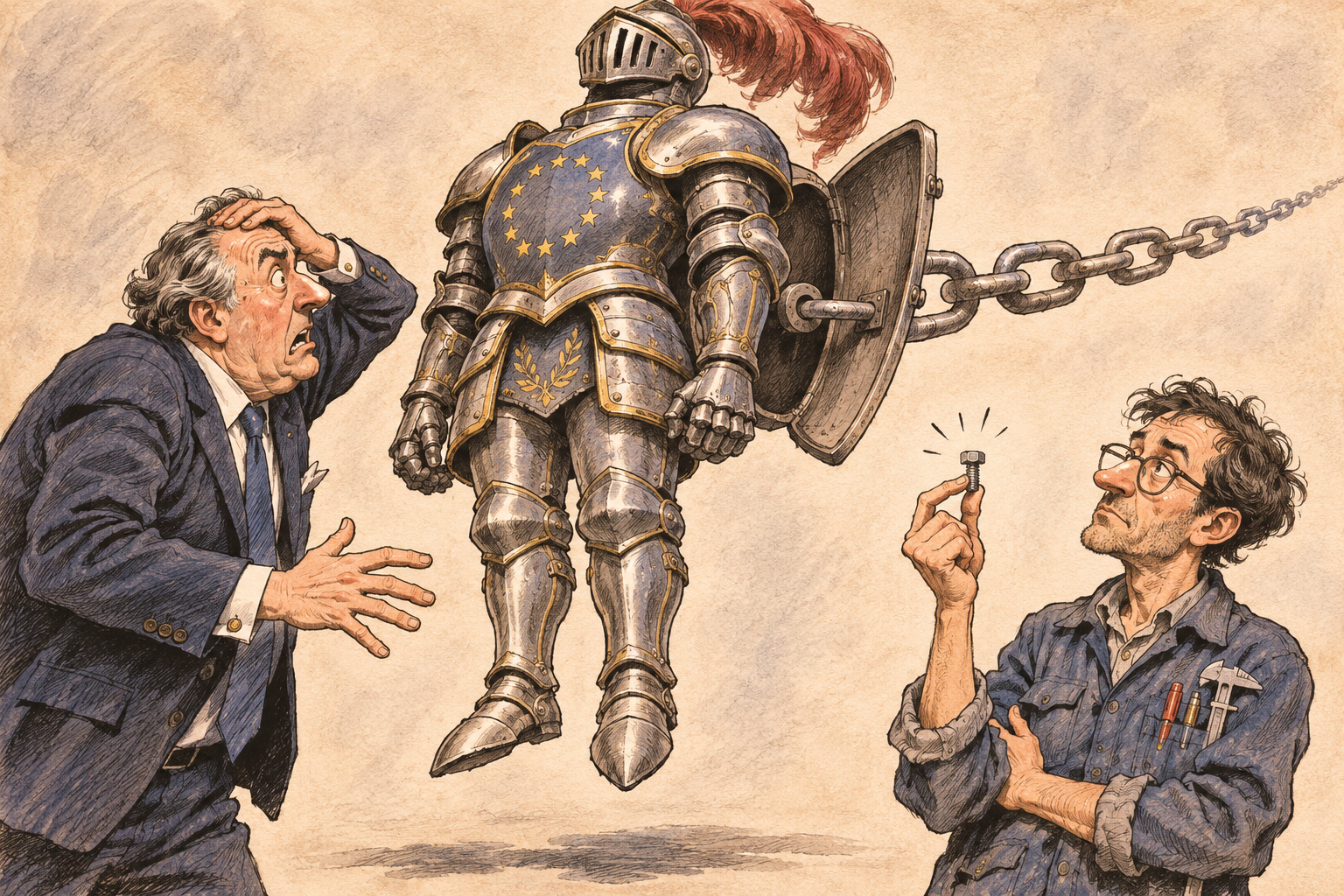
A defence policy can promise autonomy while remaining dependent on decisions made elsewhere. The practical question is not whether Europe can eliminate every foreign connection, but whether it can identify the ones capable of stopping an operation, delaying a repair or making a political commitment impossible to sustain. That is the thread connecting the three main subjects on the EU defence ministers’ agenda for 17 November.
The official meeting page announces discussions on the security and defence aspects of relations with China, including critical dependencies; support for Ukraine, with a focus on air defence and integration into Europe’s defence industrial base; and transatlantic security. At this article’s verification point the page still presents agenda highlights. An announced discussion is not a decision, a procurement contract or evidence that equipment has been delivered.
The Council’s background brief places supply chains and freedom of navigation within the China discussion. Its transatlantic section also situates the meeting against US expectations that Europe should assume greater responsibility for its defence. These are the institutional framing of the talks, not a new FaultLine disclosure about a particular supplier or a prediction of an American withdrawal.
Our interpretation is that these subjects should be examined together. An industrial plan can look ambitious in aggregate while remaining fragile at one small point: a component with no qualified alternative, a maintenance process controlled abroad or a production line that cannot expand quickly. Those examples describe the kinds of dependency an assessment should test. The meeting documents do not identify a newly discovered bottleneck in a named weapons system.
The useful measure of resilience is therefore more demanding than a European label on the finished product. Policymakers should ask how long a replacement takes, which permissions it needs and whether an alternative works under operational conditions. Holding a reserve, qualifying another supplier and redesigning a component solve different problems. Each has a cost, and none can be assumed to happen merely because governments approve a larger spending envelope.
Ukraine adds an immediate time dimension. The agenda connects air defence with industrial integration, bringing present protection and future production into the same conversation. The policy test we propose is whether longer-term arrangements help meet urgent needs rather than postponing them. Integration should be assessed through usable capacity and a credible delivery sequence, while respecting Ukraine’s own priorities; it cannot be demonstrated by an invitation to a ministerial session.
The transatlantic relationship presents a similar challenge. Greater European capacity can strengthen an alliance by making its commitments more sustainable. It need not be sold as a promise to operate without partners. But a division of responsibility is credible only when governments say what they can provide, when it will be available and which dependencies remain. Political reassurance cannot substitute for that account, just as procurement alone cannot decide the political terms of cooperation.
There is a democratic obligation here as well as an industrial one. Citizens are being asked to support decisions that consume resources over many years. They should be able to distinguish orders from deliveries, national preferences from operational requirements and a real reduction in vulnerability from a change of branding. Some details must remain confidential; the objectives, trade-offs and measures of progress need not all disappear with them.
The 17 November meeting may help clarify choices. At this stage, its agenda supplies questions rather than results. Europe will have a stronger defence policy when it can explain which risks it accepts, which it is reducing and how it knows the difference.
Related analysis
Sources & verification
- Council of the EU · Foreign Affairs Council (Defence), 17 November 2026 · agenda, not adopted outcomes
- Council of the EU · Background brief for the 16–17 November meetings · 13 November 2026
Desk analysis based on the sources above. Interpretations are identified in the text. Later developments may change this assessment.