Antalya’s methane test begins after the leak is found.
The UN climate chief called for faster cuts at COP31. The question for regulators is whether a detection becomes a completed and verified repair.
The FaultLine Desk · Published 13 November 2026 · Sources checked 13 November 2026
Source date: 12 November 2026
At the leaders-level summit on non-CO₂ greenhouse gases in Antalya on 12 November, UN Climate Change Executive Secretary Simon Stiell argued that reducing methane can limit near-term warming. He also made clear that this has to be accompanied by rapid action on carbon dioxide. The speech is a case for action, not an announcement that emissions have fallen.
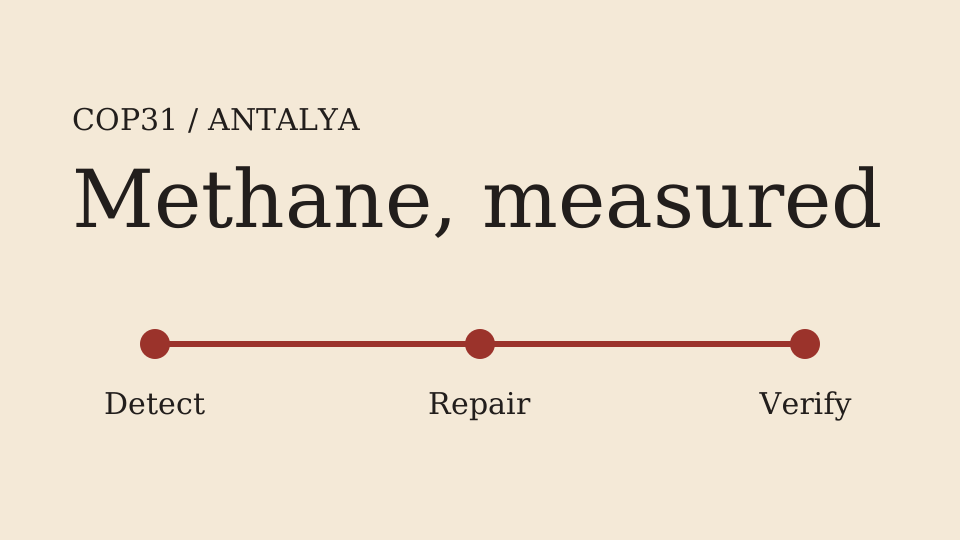
The policy challenge starts when a leak is detected. Someone has to establish who is responsible, require a fix and determine whether the repair worked. A registry that records detections but not completed repairs can make a monitoring programme look busier without showing whether it made a difference.
For regulators and buyers, the useful comparison is between policies that report alerts and policies that report closure. Ask who checks the repair, what happens when the problem recurs, and whether the results can be independently compared. The summit put the issue on the agenda. The evidence will come from what happens after the alert.
Related analysis
Sources & verification
Desk analysis based on the sources above. Interpretations are identified in the text. Later developments may change this assessment.