Europe’s methane delay exposes the price of supply security.
The Council wants to postpone import checks while energy markets are under pressure. The proposal still needs agreement with Parliament.
The FaultLine Desk · Published 7 November 2026 · Sources checked 7 November 2026
Source date: 6 November 2026
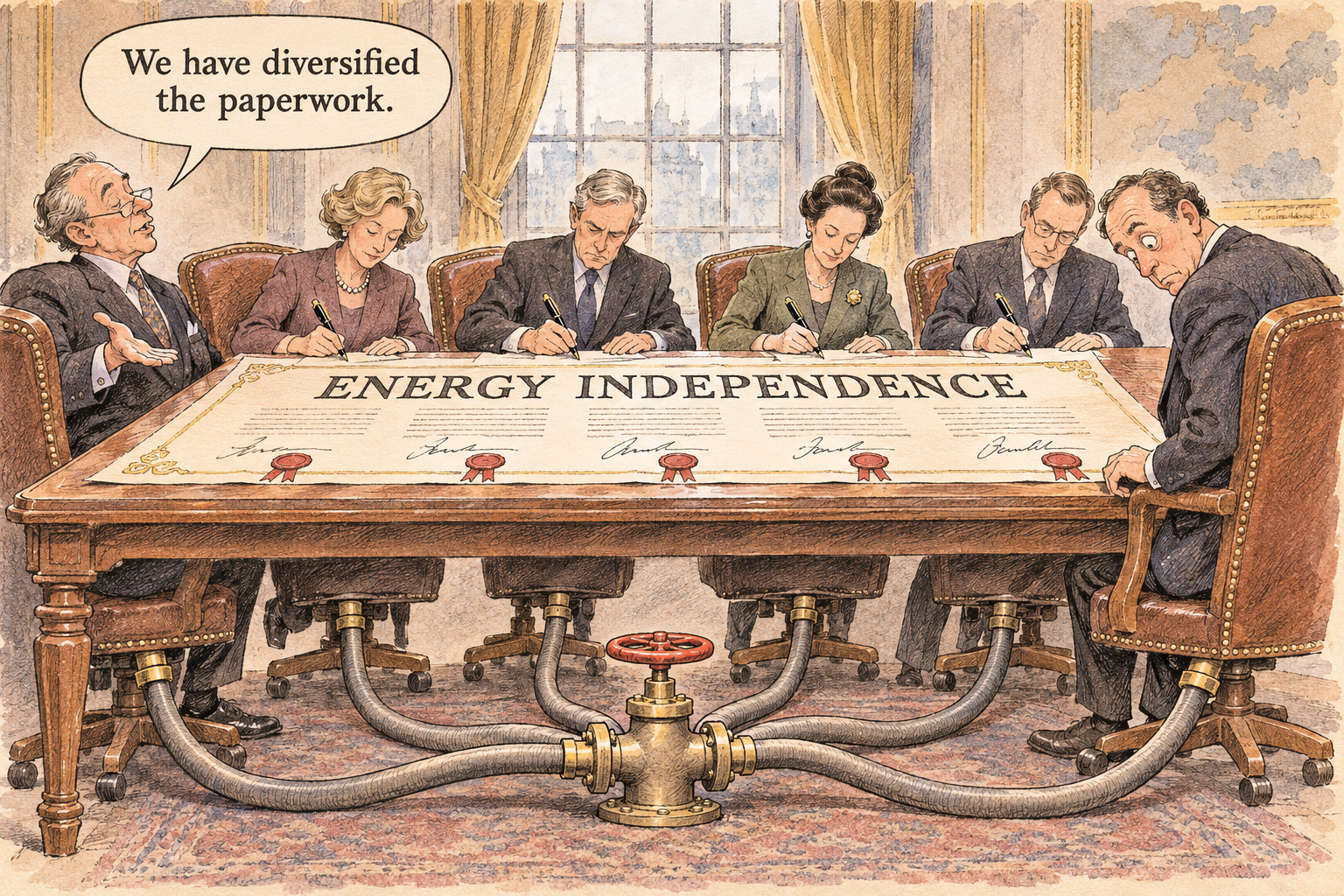
EU governments agreed on 6 November to seek a one-year postponement of parts of the methane regulation, citing energy-market disruption linked to the Middle East conflict. Their position would move import monitoring, reporting and verification to January 2028, methane-intensity reporting to August 2029 and intensity limits to August 2031. This is the Council’s negotiating position, not a completed change to the law; agreement with the European Parliament remains necessary.
The proposal also introduces a practical test. By September 2027, the Commission would assess whether verification capacity and implementing arrangements are available. If necessary conditions were missing, import-related monitoring could be postponed further. That creates a distinction between a calendar extension and a system that is actually ready to operate.
FAULTLINE analysis: the geopolitical issue is Europe’s ability to attach conditions to purchases when it is also worried about obtaining enough supply. A large market can demand better information from sellers, but that leverage becomes harder to exercise when governments fear additional friction in procurement. The Council’s argument does not establish that every supplier would withdraw or that prices would necessarily rise without a delay. It does reveal which risk governments currently place first.
There is a credible implementation argument here. Rules that require independent verification cannot work merely because a deadline has arrived. Insufficient capacity could reward paperwork over reliable measurement. But moving the deadline also postpones the point at which the market must demonstrate compliance. Governments should therefore distinguish between specific missing infrastructure and a general desire to avoid difficult negotiations with exporters.
The useful test over the next year will be evidence of preparation: functioning information transfers, enough qualified verifiers and contracts that can accommodate the requirements. If those conditions improve, the extra time may make enforcement stronger. If they do not, the temporary concession becomes an invitation to request another. Energy security and climate credibility meet in the same administrative machinery, and neither is served by treating a postponement as a result.
Related analysis
Sources & verification
Desk analysis based on the sources above. Interpretations are identified in the text. Later developments may change this assessment.