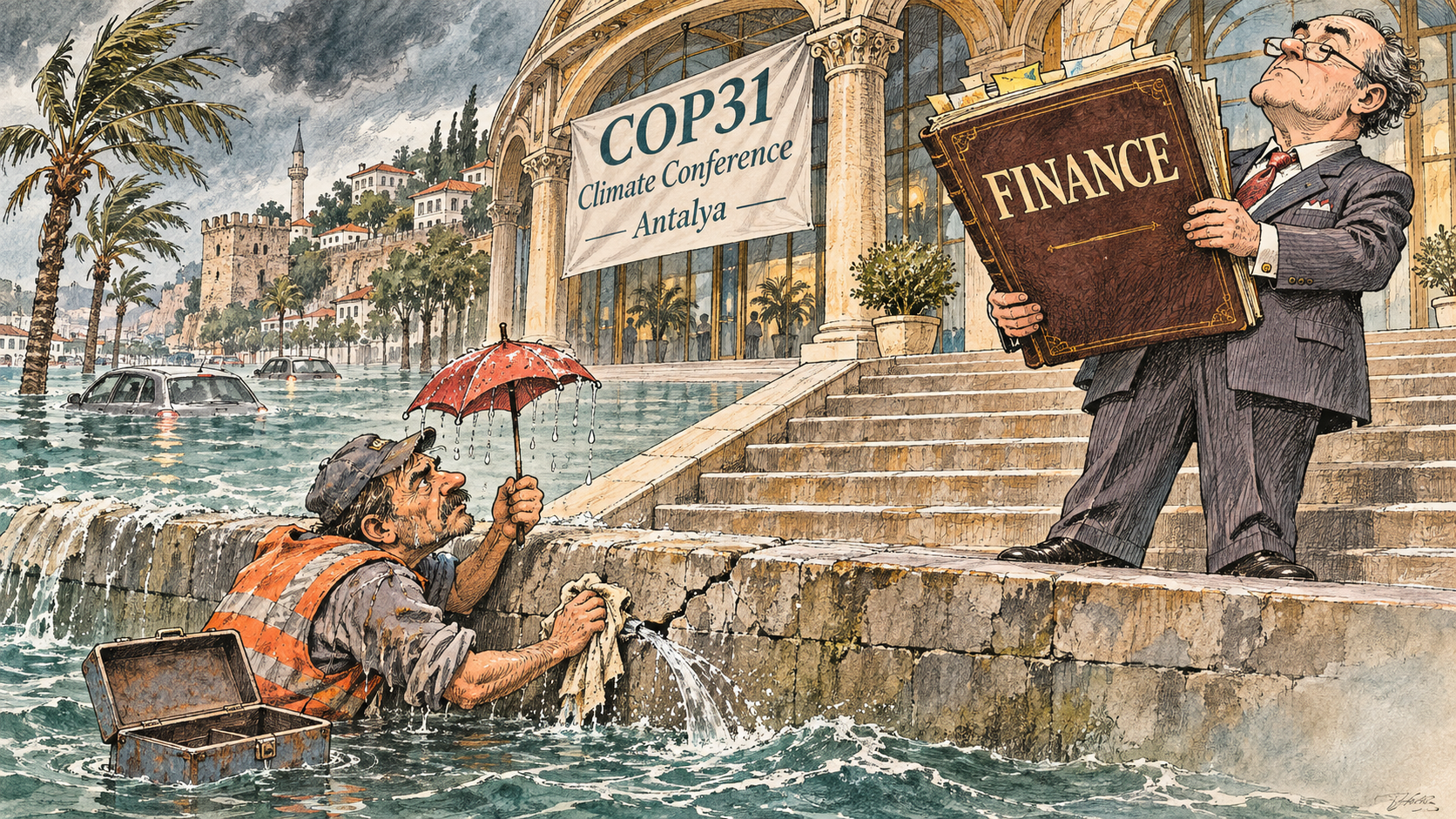
COP31 has a finance ledger. Adaptation still needs a delivery system.
Antalya’s climate-finance meetings can measure flows and restate targets. The harder question is whether money reaches projects before risks become losses.
The FaultLine Desk · Published 11 November 2026 · Sources checked 11 November 2026
Source date: 10 November 2026
COP31’s Standing Committee on Finance presented its flagship reports in Antalya on 10 November, including a biennial assessment of climate-finance flows and work on financing water systems and the ocean. The conference schedule establishes that these products were presented; it does not prove that identified needs have been funded or implemented.
Climate finance is often discussed as a volume. Adaptation is experienced as a delivery chain: a municipality needs an eligible project, technical capacity, a funding window, approval, procurement and maintenance. A commitment can therefore look substantial at global level while arriving too slowly for the place exposed to heat, flood or water stress.
Measurement still matters. Comparable data can show which instruments are loans or grants, where money originates and which sectors receive it. But aggregate flows can conceal who carries debt, whether smaller administrations can apply and whether funds pay for prevention or only reconstruction after damage.
The useful test is not whether delegates agree that adaptation deserves more attention. It is whether published mechanisms reduce the time and cost between an identified risk and a functioning intervention, while making local communities part of the decision rather than the last link in a reporting chain.
COP31 can improve the ledger and the rules around it. Delivery will be visible elsewhere: in funded pipelines, completed works, disclosed terms and lower losses. Until those outcomes appear, the finance architecture remains a promise with an implementation gap.
Related analysis
Sources & verification
- UNFCCC · Standing Committee on Finance event at COP31, 10 November 2026
- UNFCCC · Communications to Parties and observers, 10 November 2026
Desk analysis based on the sources above. Interpretations are identified in the text. Later developments may change this assessment.