Ukraine’s winter risk now runs from the power socket to the Black Sea.
The UN links attacks on energy systems, nuclear-site safety and civilian shipping. A short humanitarian pause shows that limited de-escalation is possible, not that it will spread by itself.
The FaultLine Desk · Published 10 November 2026 · Sources checked 10 November 2026
Source date: 9 November 2026
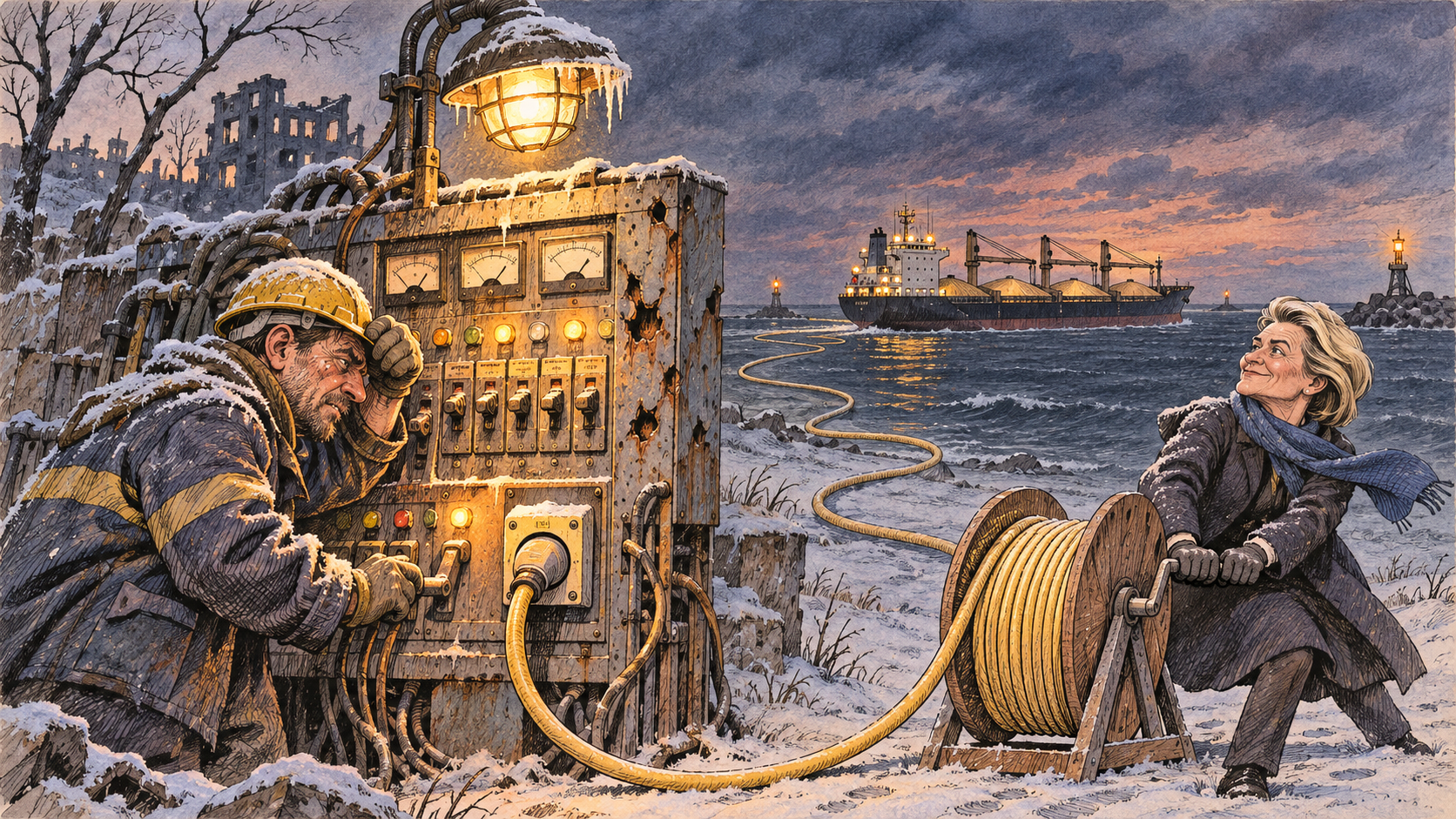
A United Nations political-affairs briefing on 9 November described a worsening civilian picture in Ukraine as winter approaches. It cited damage to critical energy facilities that left hundreds of thousands of households without electricity, disruption to water and public transport, unstable external power at the Zaporizhzhia nuclear plant and incidents affecting commercial ships in and beyond Ukrainian waters. These are reported events presented to the Security Council; where attribution remains contested, the briefing’s wording must not be treated as an independent judicial finding.
The common thread is infrastructure that civilians cannot easily replace. Electricity is not only heat and light: it supports water, transport, communications and the stable operation of nuclear sites. A strike on a substation can therefore create cascading risk without producing the visual destruction associated with a frontline attack.
The Black Sea adds a global channel. The UN warned that incidents involving civilian shipping undermine maritime safety and food security because alternative routes cannot fully replace the sea’s carrying capacity. That does not mean every incident has the same cause or commercial effect. It means that repeated disruption can change insurance, routing and confidence before a formal closure occurs.
The briefing also highlighted a six-day local humanitarian ceasefire in Oleshky, reportedly the longest fully implemented pause since 2022. Its importance is practical and limited: it demonstrates that the parties can comply with a bounded arrangement when intermediaries create the conditions, but it does not establish a wider ceasefire mechanism.
The next test is whether that narrow precedent can be replicated around energy infrastructure, civilian ports and other places where a pause would measurably reduce harm. Calls for an immediate, full and unconditional ceasefire remain the UN position. Evidence of movement will be a verified arrangement, a monitoring method and fewer attacks—not simply another diplomatic statement.
Related analysis
Sources & verification
- UN DPPA · Security Council briefing on Ukraine, 9 November 2026
- UN DPPA · Today’s top news summary, 9 November 2026
Desk analysis based on the sources above. Interpretations are identified in the text. Later developments may change this assessment.