Attracting Italians home is only the first test.
A new exploratory study raises a question of state capacity: what makes a return sustainable after the announcement?
The FaultLine Desk · Policy interpretation of a book from the NOMAG publishing network · Published 15 November 2026 · Sources checked 15 November 2026
Source date: New research book, November 2026; archive photograph published October 2021
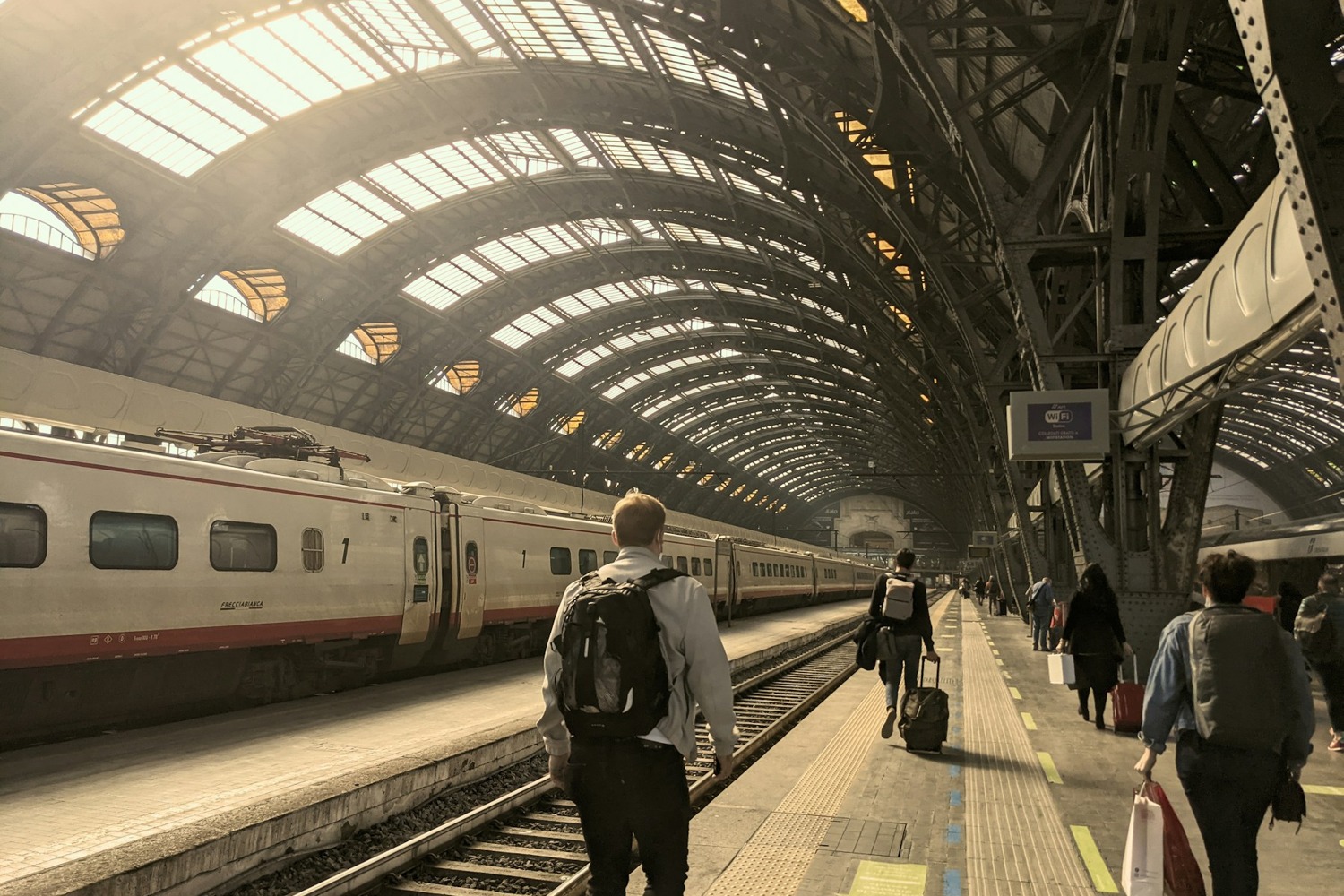
A return to Italy can be announced on one day. Judging whether the move works takes much longer. Employment, housing, a partner’s prospects and the services a household needs do not become sustainable merely because a transfer has been completed. For governments interested in attracting people home, that gap is a test of state capacity.
A volte ritornano, the fourth NOMAG Research Book, examines Italians’ return experiences through fifty questions. Published by NOMAG and ITS ITALY, with research coordination by Matteo Cerri, it considers work, personal income, housing, family, services, expectations and future plans. The volume is currently available in Italian only. Its publication provides the occasion for this policy argument; it does not constitute an evaluation of any particular government measure.
The main analytical base is 708 participants recruited through a voluntary network. At the time of the study, 498 were living in Italy, 121 were abroad again and 89 were living across countries. The investigation is exploratory and not nationally representative. The proportion abroad again is not Italy’s national re-emigration rate, and it cannot establish the success or failure of a return policy.
That limitation should shape the debate. A further departure can follow a worthwhile period in the country; remaining can coexist with professional frustration or family obligations. A credible evaluation would need to follow people over time, distinguish their circumstances and examine more than their current address. These are requirements we propose for policy scrutiny, rather than results demonstrated by this sample.
The liberal case begins with the individual. People who have lived abroad are entitled to make choices that governments find inconvenient. A person can value Italy, return for a period and later move again without owing the state a permanently fixed life. Public policy should widen workable choices, and explain honestly which outcomes it is trying to improve.
The institutional problem is coordination. Housing, employment, education and public administration may sit in separate portfolios, but a household experiences them together. An attractive opportunity for one partner may leave another with no credible professional path. A relocation can be administratively complete while the family still lacks an arrangement it can sustain. These are examples of questions to investigate, not individual cases reconstructed from the book.
This is also a question about how a country relates to experience acquired elsewhere. International networks and skills need settings in which they can be used. It is reasonable to ask employers and public institutions what recognition means in practice: responsibilities, professional opportunities and the ability to contribute. A celebratory story about homecoming is not evidence that those conditions exist.
A useful public account would state the objectives of a return initiative, the evidence used to assess it and the time horizon over which results are judged. It would distinguish the initial decision to move from employment quality, household sustainability and subsequent choices. The aggregate responses in this book cannot supply that evaluation; they help formulate the questions.
Counting an arrival is a start. The political test is whether the everyday institutions around it can earn trust after the announcement. The next part of the return debate should be about that capacity, and about the freedom to build a life that may continue to cross borders.
Related analysis
Sources & verification
- NOMAG · ITS ITALY — A volte ritornano, fourth NOMAG Research Book, Italian-language edition
- Kindle edition — A volte ritornano
- Photograph: Jonathan Ansel Moy de Vitry — Milano Centrale, published October 2021; Unsplash License
Desk analysis based on the sources above. Interpretations are identified in the text. Later developments may change this assessment.