A broken navigation aid in Hormuz is a fact. The cause and strategic effect remain unproven.
An Iranian official says aids in the southern strait were destroyed and unauthorised vessels did not pass. The report leaves the actor, timing and operational consequences unresolved.
The FaultLine Desk · Published 9 November 2026 · Sources checked 9 November 2026
Source date: 9 November 2026
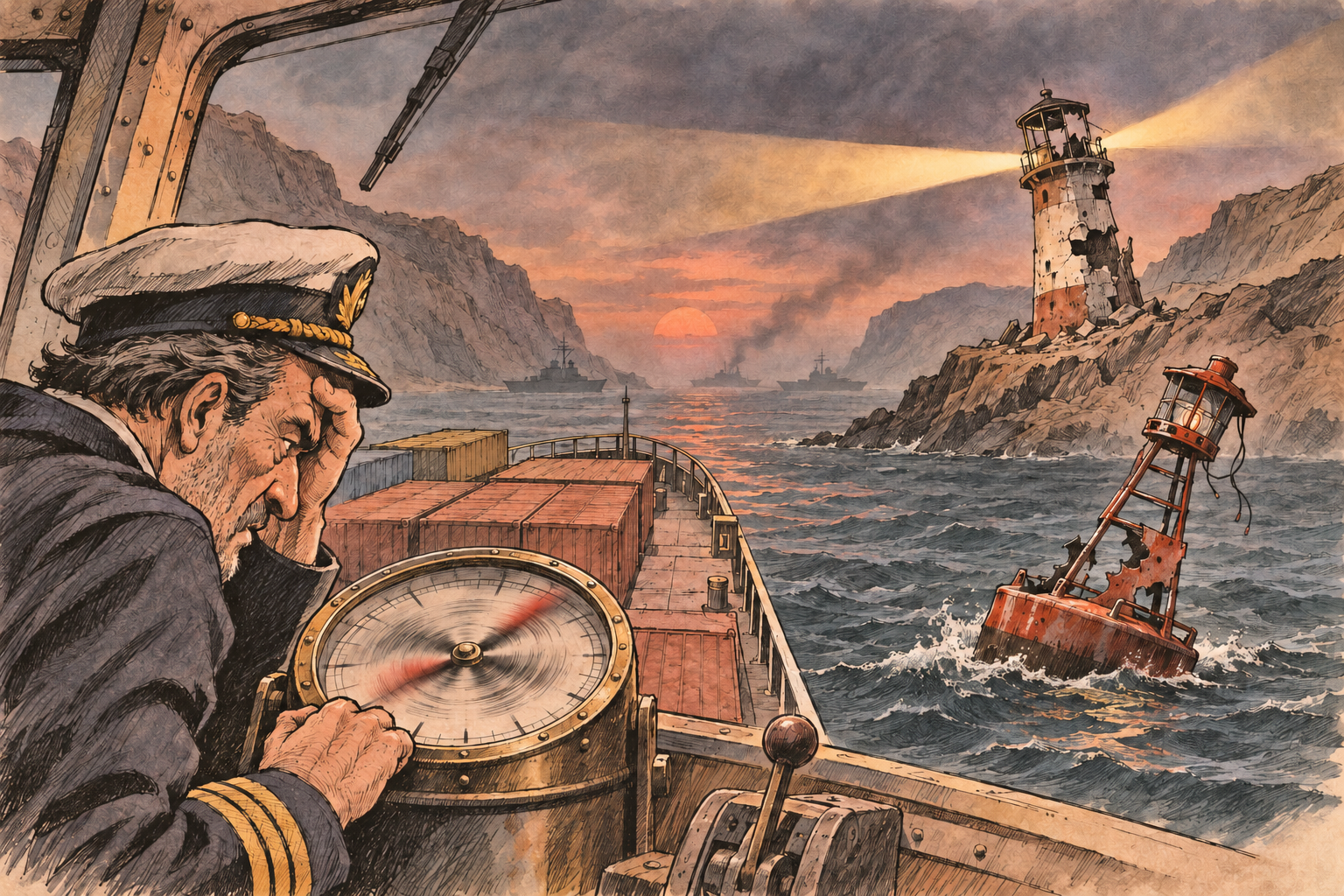
Reuters reported on 9 November that an Iranian official said navigation aids in the southern Strait of Hormuz had been destroyed and that no unauthorised vessels had passed through. Those are attributed claims from an unnamed Iranian official. The report, as available, does not establish who damaged the equipment, when it happened or how much commercial traffic was affected.
That missing information is not a minor detail. Navigation infrastructure can be damaged by conflict, deliberate interference, accident or maintenance failure. Each explanation carries a different implication for maritime security. Treating destruction as proof of a particular attacker would move beyond the evidence currently reported.
The claim that no unauthorised vessels passed is also narrower than a claim that the strait was closed. Hormuz is one of the world's most consequential energy routes, but a statement about authorisation does not disclose the criteria used, the number of ships delayed or the duration of any restriction.
For shipping companies and governments, uncertainty itself creates cost. A master deciding whether to transit must assess notices, positioning data, insurance conditions and naval advice. A damaged beacon can be operationally significant even before a wider strategic conclusion is justified.
The next useful evidence would include navigational warnings, port or maritime-authority notices, independently confirmed traffic data and a clear account of the equipment affected. Until then, the responsible conclusion is limited: an Iranian official reports damaged aids and controlled passage; the cause and scale remain open questions.
That distinction matters because the strait is vulnerable to narrative escalation. Governments can use ambiguity to signal control, while markets can price a risk before its physical extent is known. The job of analysis is to keep the reported event, the official position and our inference in separate columns.
Related analysis
Sources & verification
Desk analysis based on the sources above. Interpretations are identified in the text. Later developments may change this assessment.