Europe has named its Ukraine negotiating team. The funding decision is still ahead.
Dublin clarified who coordinates Europe’s negotiating position. The 26–27 November European Council will have to address what Europe can put behind it.
The FaultLine Desk · Published 14 November 2026 · Sources checked 14 November 2026
Source date: 13 November 2026
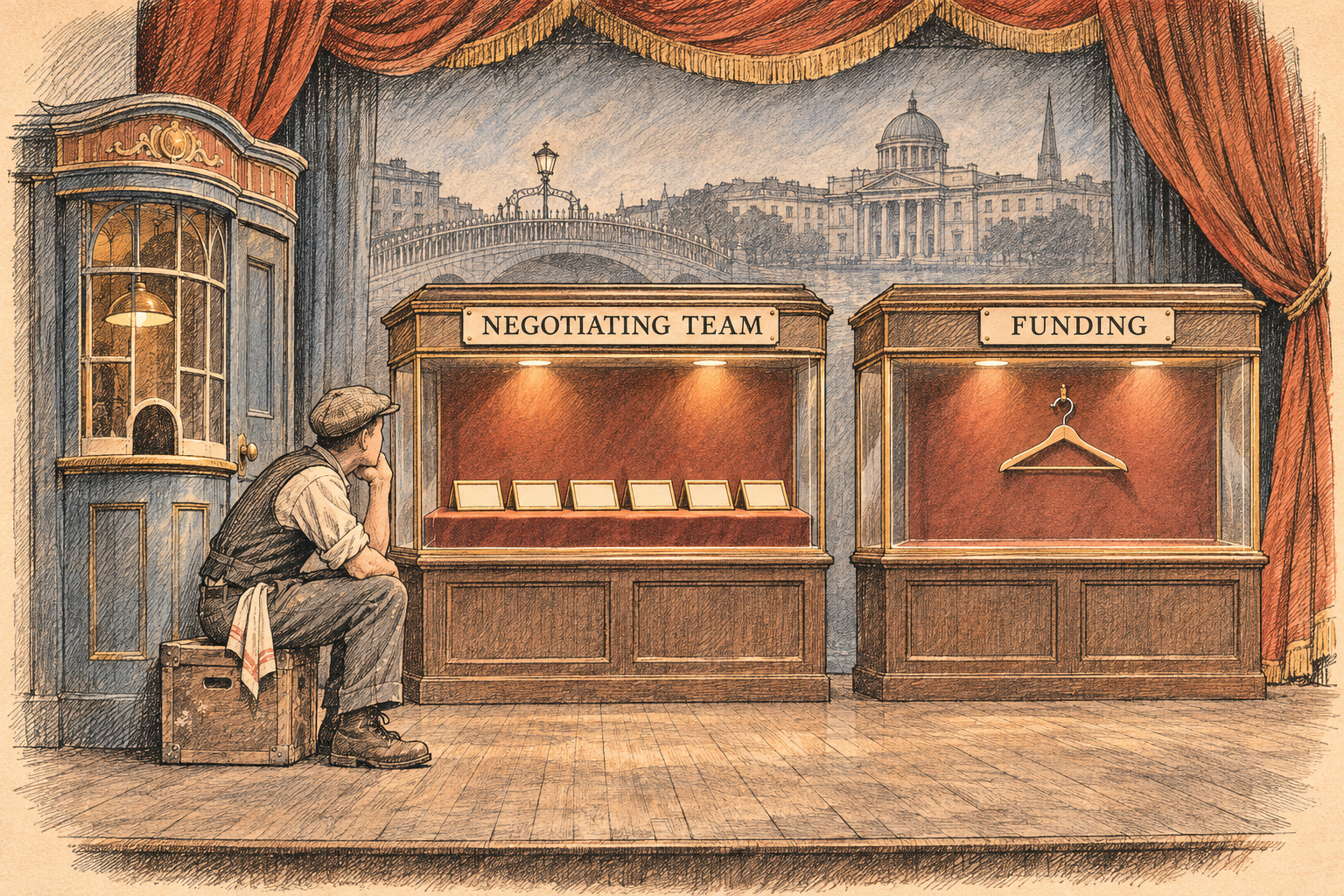
At the end of the informal EU leaders’ meeting in Dublin on 13 November, European Council President António Costa said the institutions of the European Union and the E5 countries from the Coalition of the Willing would form the European team on negotiations over peace in Ukraine. Costa also drew a boundary around that role: questions concerning Ukraine’s territory and sovereignty are for Ukraine to decide. He put security guarantees in the Coalition of the Willing framework, in close coordination with NATO.
A team can coordinate positions before they reach a negotiating room. There is value in knowing who does that work. Diplomacy often becomes bogged down when public statements and private messages diverge, and the Dublin arrangement is an effort to reduce that friction. There are also limits to what a team announcement achieves. It creates neither a completed peace agreement nor a settled set of security guarantees, and it does not commit every actor to the same timetable. An agreement would still depend on what Ukraine accepts and on the obligations others actually undertake.
The second part of Costa’s statement is the more immediate test. He said the European Council on 26–27 November would discuss Ukraine’s financing needs for 2027 and beyond, on the basis of forthcoming Commission proposals. That is a discussion scheduled for later this month, not a funding instrument approved in Dublin. A strong collective position can buy negotiating space. In practical terms, credible support also depends on whether financing has an agreed amount, an appropriate time horizon and a route from a European decision to usable resources.
There are thus two different things to watch: what the European team can agree to say together, and what leaders later agree to fund. Neither can be inferred from the other. The useful output of the next council will be a clearer answer on commitments, timing and accountability. Only then will it be possible to tell how much weight the diplomatic arrangement carries.
Related analysis
Sources & verification
Desk analysis based on the sources above. Interpretations are identified in the text. Later developments may change this assessment.