NATO has a counter-drone catalogue. The test is what reaches the field.
A new purchasing route removes one administrative barrier. Readiness still depends on integration, testing and the cost of keeping a system useful.
The FaultLine Desk · Published 7 November 2026 · Sources checked 7 November 2026
Source date: 5 November 2026
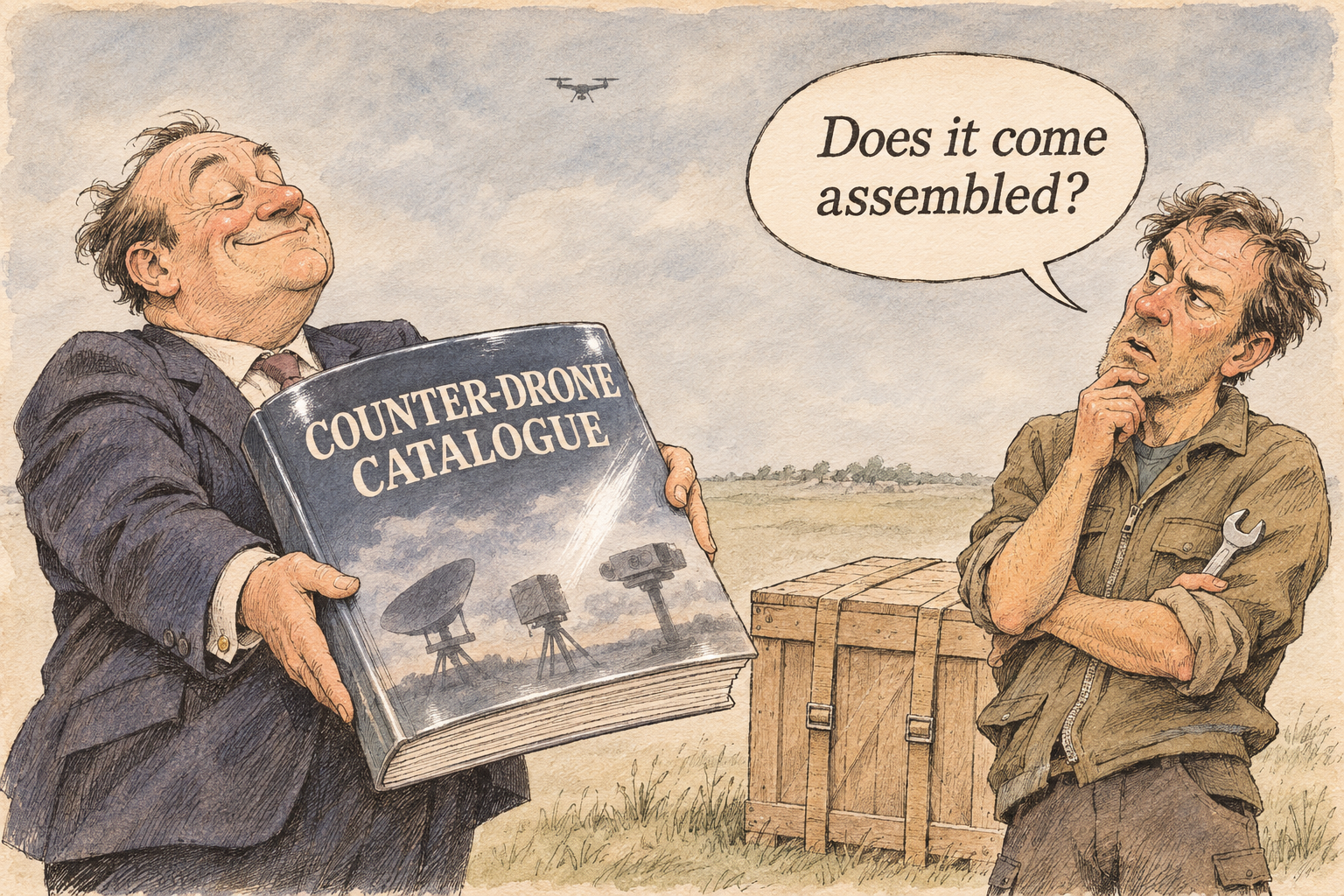
NATO launched a marketplace for counter-drone systems on 5 November, giving Allies a route to buy selected capabilities without another tender procedure. According to the Alliance, its communications agency has selected 16 solutions from five companies under framework contracts lasting eighteen months. It has also allocated €3.1 million for additional testing. These are concrete procurement arrangements, rather than another general declaration that drones matter.
The central question is whether faster purchasing produces usable protection. A catalogue can make it easier to find and contract for equipment. It cannot, by itself, determine whether that equipment fits a particular force, location or threat. Our assessment is that the meaningful unit of progress is a functioning defensive arrangement, with trained operators and dependable support, rather than the number of products listed.
Consider the decisions a buyer still has to make. What needs protection, and for how long? Which threats should a system identify? Who decides when a response is authorised? What happens when another friendly system is operating nearby? These are questions for operational planning and acceptance testing. The launch announcement does not answer them for every purchaser, and should not be read as doing so.
The provision for further trials is therefore significant. Testing should be used to expose limits, not just to produce a successful demonstration. Buyers could publish comparable measures of reliability and deployment time, while protecting genuinely sensitive information. They could also ask suppliers to state the conditions under which a claimed performance no longer applies. That would make the marketplace a learning mechanism as well as a contracting mechanism.
The eighteen-month framework also creates an institutional choice. Regular competition can open the door to improved systems. Yet a force cannot treat every new procurement round as a fresh start: it must maintain equipment, preserve training and keep different components working together. Procurement speed and continuity need to be designed together. Otherwise a catalogue that changes quickly could leave users supporting a fragmented collection of products.
Cost deserves the same discipline. A purchase price is visible; the resources needed to operate, repair and replace equipment are less immediately apparent. For a defence ministry, the useful comparison would include personnel and support over a defined period, alongside performance against a specified threat. Those are proposed tests of value, not cost figures disclosed in NATO’s announcement.
The marketplace is a credible attempt to shorten an administrative route. It should now be judged against evidence from orders, delivery and operational testing. None of those outcomes can be inferred from the launch alone. The next useful public update would explain what was bought, what was learned and which gaps remain. A faster door into procurement matters most when there is a working capability on the other side.
Related analysis
Sources & verification
Desk analysis based on the sources above. Interpretations are identified in the text. Later developments may change this assessment.