America's midterms are about more than control of Congress
Two days before voting, Americans face a struggle over power, trust and the rules of the contest itself.
FAULTLINE · Desk analysis · Published 1 November 2026 · Sources checked 1 November 2026
Source date: October 2026
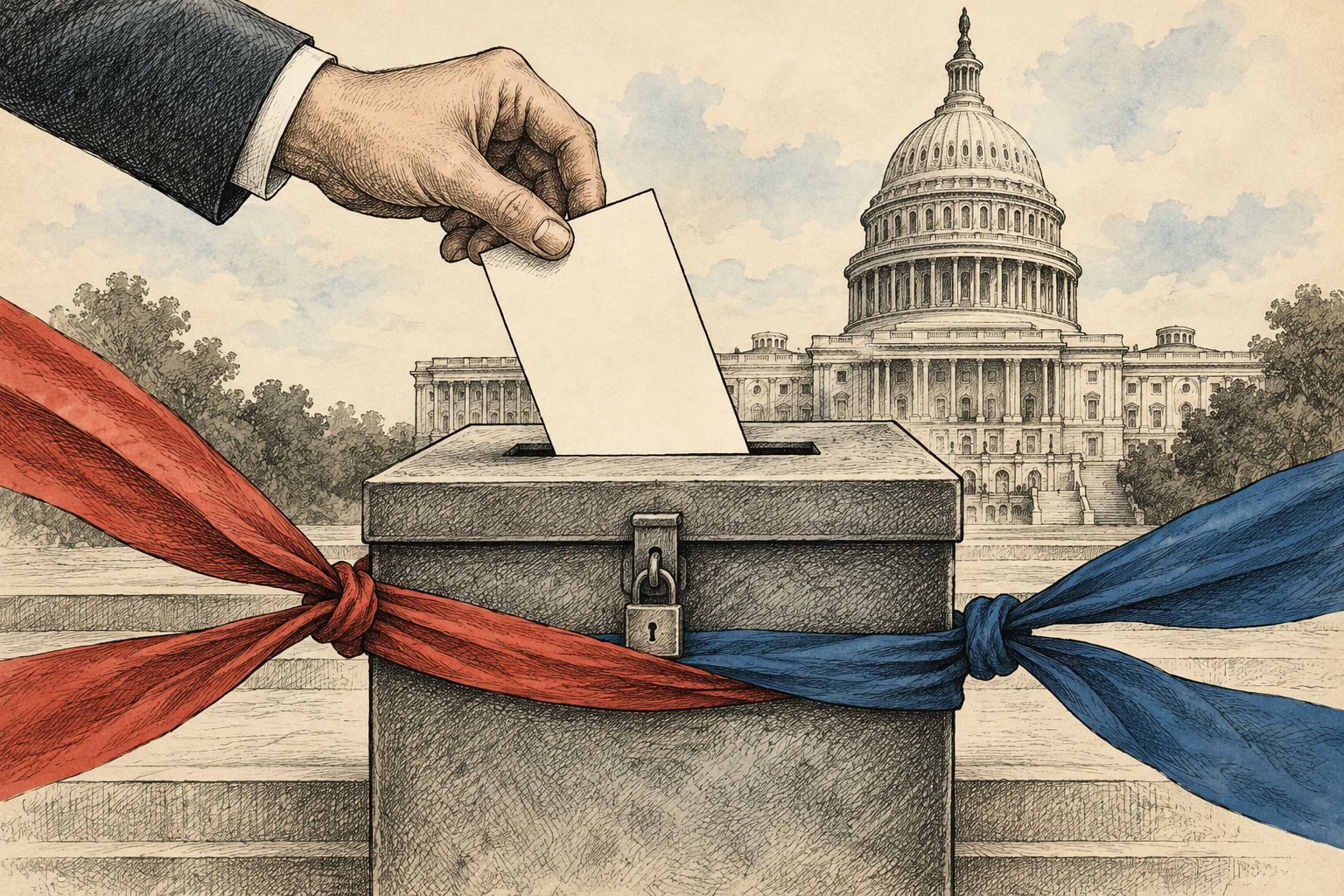
The United States votes on Tuesday, 3 November, to determine not only who controls Congress but how much room President Donald Trump will have to pursue his agenda during the next two years. Every House seat is up for election, while Senate contests will decide whether Republicans can preserve their advantage in the upper chamber. The result matters for legislation, spending and congressional scrutiny of the executive branch.
Yet the closing days of this campaign have been about more than party numbers. By the final weekend, Reuters reported that more than 51 million people had already voted. Early voting has become a defining feature of American elections, but it has not removed the uncertainty or litigation surrounding the process.
In Alaska, the Justice Department has pursued allegations concerning a similarly named Senate candidate. Those implicated in the controversy deny wrongdoing. In California, a federal appeals court rejected an emergency attempt to challenge thousands of mail ballots, while other disputes concern access to voter-registration data. Legal conflict is not in itself proof of electoral misconduct. It does, however, show how much of the argument about legitimacy now takes place before results are counted.
Republicans argue that their policies and congressional majorities are necessary to deliver their programme and maintain governmental continuity. Democrats are presenting the election as an opportunity to impose checks on the presidency and redirect national priorities. Both arguments depend on participation, and neither is a substitute for a trusted count.
The most immediate question is who wins. The longer-term question is whether a close result will be accepted as an ordinary political outcome. An election system is tested when voters disagree sharply about the stakes and nevertheless accept the procedures by which those disagreements are decided.
On Tuesday, America will choose a Congress. It will also reveal something about the strength of the rules that make such a choice possible.
Related analysis
- Denver exposes the Democrats’ next choice: how to use power under divided government.
- Haiti’s casualty report demands a civilian test of security.
- Colombia’s child-recruitment problem cannot be outsourced to a peace process.
- In Sudan, an attack on electricity becomes an attack on water, health and food.
Sources & verification
- Reuters, 31 October 2026 — campaign for control of Congress enters final weekend
- Reuters, 26 October 2026 — why a Democratic landslide is not assured
- Associated Press, 30 October 2026 — election day guide to Maine's contests
Desk analysis based on the sources above. Interpretations are identified in the text. Later developments may change this assessment.